2026 Top Socks Manufacturing Machine Types for Global Buyers

Time:2026-10-27 Author:Mason
0%

Choosing the right Socks Manufacturing Machine in 2026 requires more than comparing speed, price, and brand names. Global buyers must examine knitting capacity, cylinder size, needle durability, control systems, energy use, and local technical support. A machine that produces 200 pairs per hour may still disappoint if its settings are difficult to adjust. Small factories often discover this too late.

Ettore Lonati, a respected figure in hosiery machinery, once emphasized, “Innovation must serve the product and the customer.” This principle remains practical today. Modern machines support athletic socks, compression designs, seamless patterns, recycled yarns, and customized branding. However, advanced functions do not automatically create better socks. Operators still need training, disciplined maintenance, and accurate yarn preparation. Human judgment matters.

This guide reviews the main Socks Manufacturing Machine types expected to attract global buyers in 2026. It considers single-cylinder, double-cylinder, terry, jacquard, and specialized medical-sock machines. Each category serves different production goals. Some prioritize flexibility. Others focus on volume and consistency.

The details matter.

Buyers should inspect sample output, stitch uniformity, noise levels, changeover time, and spare-part availability. Factory visits can reveal problems that brochures hide. Cost calculations should include installation, software updates, electricity, maintenance, and operator training. A lower purchase price may become expensive later. Even experienced buyers make imperfect forecasts. Market demand shifts, and some fashionable features become unnecessary. Careful comparison remains essential for building a reliable, efficient, and commercially realistic sock production line.
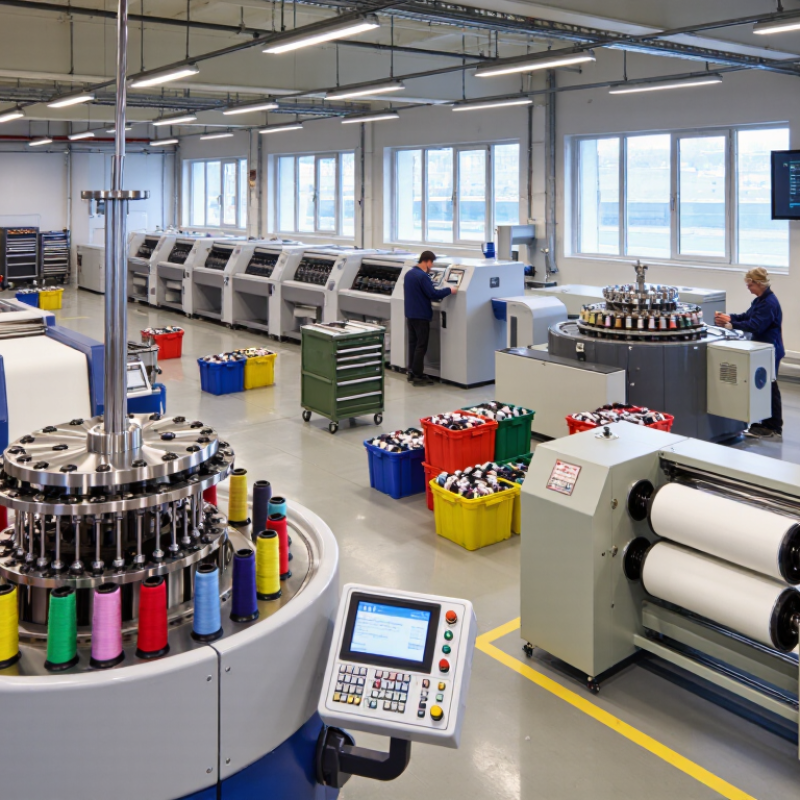
2026 Top Socks Manufacturing Machine Types for Global Buyers

How Sock Manufacturing Machines Are Classified in 2026

How Sock Manufacturing Machines Are Classified in 2026

Sock manufacturing machines are classified by knitting method, cylinder structure, gauge, and production purpose. The main category is the computerized circular sock knitting machine. It forms the sock tube, heel, toe, and patterns with programmed needle control. Single-cylinder models suit everyday socks, while double-cylinder machines create rib structures and tighter elastic zones. Gauge matters too. A 144-needle machine can produce finer surfaces, while lower gauges create heavier winter textures.

Classification also depends on automation. Basic machines require manual yarn changes and frequent inspection. Advanced systems monitor yarn tension, needle movement, and fault signals. Linking machines close the toe after knitting. Boarding machines shape socks with controlled heat and moisture.

The ITMF International Textile Machinery Statistics 2024 treats circular knitting equipment as a major machinery category, confirming its importance in global textile investment. Textile Exchange’s Materials Market Report 2024 recorded 124 million tonnes of global fiber production in 2023. That volume increases pressure for efficient, traceable production.

Fiber compatibility creates another useful classification. Cotton-rich machines need stable tension control. Wool and recycled yarns may require slower settings and larger needles. A machine advertised as “fully automatic” is not always the best choice.

In factory evaluations, maintenance access often matters more than screen size. This is easy to overlook. Buyers should compare output per hour, rejected pairs, energy use, and operator training time.

Industry reports provide direction, but real performance still depends on yarn quality, climate, programming skills, and disciplined maintenance. Classification is helpful, but never complete.

Circular Sock Knitting Machines for High-Volume Production

Circular sock knitting machines remain a practical choice for high-volume production. They knit continuously, reduce handling time, and support consistent output across long production runs. Single-cylinder models suit everyday socks, athletic styles, and lightweight designs. Double-cylinder machines offer stronger structure for ribbed, shaped, or heavier socks. Terry systems can add cushioning under the foot, while jacquard functions create controlled color patterns.

In production planning, buyers should examine needle quantity, cylinder diameter, knitting speed, and yarn compatibility. A machine with more needles can produce finer textures, but it may require stricter maintenance. Automatic toe closing saves labor and improves appearance. However, it can increase the initial investment. Production data often looks attractive on paper. Real workshops reveal more variables, including operator skill, humidity, yarn quality, and cleaning discipline. A faster setting may produce more pairs, but it can also increase dropped stitches and needle wear. That trade-off deserves testing.

Tips: Request sample production using your actual yarn. Check toe quality, size stability, noise, and power consumption. Measure output after several continuous hours, not only during a short demonstration. Keep spare needles and sensors available. Also, ask for training documents and maintenance intervals. These details can matter more than a high advertised speed. A balanced machine should fit your product range, workforce, floor space, and quality controls. Do not choose the most complex model automatically. Unused functions still add cost and maintenance pressure.

Flat Knitting Machines for Custom and Specialty Socks

Flat knitting machines are gaining attention in the 2026 sock manufacturing market, especially for custom and specialty products. Unlike high-speed circular systems, they can create shaped panels, local texture changes, and controlled openings. This flexibility supports small batches, sampling, and personalized designs. A 2024 Textile Exchange report recorded global fiber production at about 124 million tonnes in 2023. More material choices also create more testing work.

For buyers, machine selection should match the product’s construction, not only its advertised speed. Flat knitting equipment can produce targeted cushioning, ventilation zones, rib structures, and varied stitch densities. These details matter for hiking socks, adaptive socks, and limited-edition collections. Digital pattern control can reduce repeated sampling, although skilled operators remain essential. The International Textile Machinery Federation’s 2023 industry survey highlighted automation, energy efficiency, and production flexibility as continuing investment priorities.

Measure the real output.

A practical evaluation should include setup time, yarn waste, gauge range, maintenance access, and operator training. Ask for sample runs using the actual yarn blend. Recycled fibers may behave differently during knitting, especially when elasticity and recovery are critical. The 2024 Materials Market Report from Textile Exchange also noted continued growth in recycled-material use, but supply consistency remains uneven. Flat knitting is not automatically the best solution. Its slower production rate can become expensive for basic volume socks. I would also question any calculation that ignores programming labor, failed samples, or finishing time. Those costs are easy to hide.

2026 Top Socks Manufacturing Machine Types for Global Buyers - Flat Knitting Machines for Custom and Specialty Socks
Machine Type Knitting Structure Typical Gauge Range Suitable Sock Categories Customization Capability Typical Production Characteristics Best Fit for Global Buyers Key Purchasing Considerations
Electronic Flat Knitting Machine Flat needle beds create shaped knitted panels or complete knitted components through programmed needle selection. Approximately 3–16 needles per inch, depending on machine configuration. Custom socks, knitted uppers, specialty hosiery components, compression-related panels, and small-batch products. High flexibility for color placement, stitch changes, shaped sections, logos, textures, and sample development. Flexible, not maximum-volume
Efficient for prototypes, varied designs, and short production runs; output depends on size, stitch density, yarn, and programming.
Design-led manufacturers, private-label suppliers, technical textile producers, and buyers requiring frequent style changes. Check needle-bed width, programming software, transfer functions, yarn feeder configuration, operator training, and spare-part availability.
Computerized Whole-Garment Flat Knitting Machine Programmable knitting system capable of producing shaped, three-dimensional articles with reduced or no sewing for selected constructions. Commonly available in fine to medium gauges, approximately 5–16 needles per inch. Seam-reduced socks, anatomical designs, seamless specialty items, medical-support components, and premium fashion products. Very high control over shaping, stitch density, ventilation zones, contours, and multiple yarn effects. High design precision
Can reduce assembly operations, but programming and setup are more complex than conventional knitting.
Premium product developers and manufacturers targeting comfort, fit, low-seam construction, and technical performance. Evaluate three-dimensional shaping range, transfer accuracy, production software, technical support, and compatibility with elastomeric yarns.
Jacquard Flat Knitting Machine Electronic needle selection and multiple yarn systems form patterned structures and color effects on a flat needle bed. Approximately 3–12 needles per inch for medium to heavy patterned constructions. Fashion socks, graphic designs, collegiate-style patterns, decorative cuffs, intarsia-like effects, and premium custom collections. High capability for multi-color motifs, geometric patterns, raised textures, and localized design details. Pattern-focused
Production speed varies with the number of colors, yarn changes, stitch transfers, and pattern complexity.
Brands and contract manufacturers emphasizing visual differentiation and limited-edition or seasonal designs. Review color-change efficiency, yarn carrier count, pattern software, color registration, waste control, and design file compatibility.
Rib and Transfer Flat Knitting Machine Uses rib structures and needle transfer techniques to create elasticity, relief, shaping, and dimensional surface effects. Approximately 3–14 needles per inch, depending on the required thickness and stretch. Ribbed socks, comfort cuffs, support products, thick winter styles, textured socks, and structured specialty designs. Good control over cuff elasticity, vertical ribs, relief patterns, stitch density, and shaped zones. Structure and stretch
Well suited to products where recovery, thickness, and tactile surface are more important than maximum speed.
Manufacturers producing comfort-oriented, outdoor, winter, workwear, and performance sock collections. Confirm transfer speed, elastic-yarn handling, maximum fabric thickness, needle selection accuracy, and compatibility with reinforced yarns.
Heavy-Gauge Flat Knitting Machine Coarser needle spacing produces thicker knitted structures with larger loops and higher material coverage. Approximately 1.5–7 needles per inch. Heavy winter socks, boot socks, thermal products, slipper socks, work socks, and protective knitted components. Moderate customization through stitch structure, color blocking, ribbing, padding zones, and yarn combinations. Thick and durable
Generally handles bulky yarns and dense structures better than fine-gauge systems; finished output is usually lower in pieces per hour.
Outdoor, industrial, cold-weather, and comfort-product suppliers requiring warmth, cushioning, and durability. Check yarn clearance, maximum stitch thickness, take-down capacity, reinforcement options, power requirements, and floor-space needs.
Fine-Gauge Flat Knitting Machine Fine needle spacing forms lightweight fabrics with smaller loops and detailed stitch definition. Approximately 12–18 needles per inch, with the exact range varying by machine design. Lightweight fashion socks, dress socks, fine liners, breathable products, and delicate specialty constructions. High detail for fine patterns, lightweight textures, ventilation structures, and subtle shaping. Fine and lightweight
Requires carefully selected yarns, precise tension control, and stable operating conditions.
Premium apparel producers and buyers serving formalwear, fashion, travel, and lightweight comfort markets. Assess minimum yarn size, tension stability, needle durability, fabric inspection requirements, and operator skill level.
Multi-Feed Flat Knitting Machine Multiple yarn feeders support different yarns, colors, or functional zones within one programmed knitted article. Approximately 3–16 needles per inch, depending on the selected bed and feeder configuration. Performance socks, moisture-management designs, reinforced areas, thermal products, and multi-material custom socks. High capability for combining elastic, synthetic, natural, conductive, reflective, or reinforcing yarns in selected areas. Multi-material capable
Can reduce handling between operations, although feeder changes and complex programs may affect cycle time.
Technical textile manufacturers and buyers developing socks with targeted comfort, support, durability, or visual effects. Verify feeder quantity, yarn-path compatibility, tension control, feeder-change time, cleaning requirements, and software flexibility.
Sample and Prototyping Flat Knitting Machine Compact or flexible flat-bed system designed for rapid sampling, product development, and limited production quantities. Approximately 3–16 needles per inch, based on the required sample fabric. Prototype socks, customized samples, fit trials, design testing, educational production, and made-to-order collections. Very high flexibility for rapid pattern revisions, stitch experiments, color trials, and size adjustments. Low-volume development
Prioritizes quick changeovers and design iteration rather than the lowest unit cost at mass-production volumes.
Start-ups, development studios, custom manufacturers, universities, and factories launching new sock programs. Consider programming simplicity, sample changeover time, machine footprint, training needs, and the ability to scale approved designs.
Semi-Automatic Flat Knitting Machine Combines mechanical or manually assisted operations with electronic or programmable needle selection, depending on configuration. Approximately 3–12 needles per inch. Basic custom socks, ribbed products, small-series workwear socks, repair production, and entry-level specialty items. Moderate customization for standard patterns, color changes, stitch structures, and selected shaped sections. Cost-conscious
Usually has a lower initial investment and simpler maintenance, but may require more operator involvement and deliver less automation.
Small and medium-sized factories entering flat knitting or serving regional custom markets. Compare labor requirements, safety features, control-system usability, maintenance access, training support, and upgrade options.
Note: Gauge, output, and customization ranges are typical industry reference ranges rather than guaranteed specifications. Actual performance depends on machine design, needle-bed width, yarn composition, stitch density, sock dimensions, pattern complexity, operator skill, and production settings.

Sock Linking, Toe Closing, and Seam-Finishing Machines

2026 Top Socks Manufacturing Machine Types for Global Buyers

Sock linking machines connect knitted panels with controlled stitch formation. They help create a smooth transition around the ankle and leg. Buyers should check needle compatibility, linking speed, and fabric tension control. A machine that handles fine cotton may struggle with thick wool blends. Production trials matter more than catalog promises.

Toe Closing Machines

Toe closing machines seal the toe opening after knitting. Modern systems can use chain, flat, or concealed closing methods. The correct choice depends on comfort targets, sock thickness, and required appearance. Poor tension may leave bulky ridges inside the toe. That small defect can cause customer complaints. Faster output is not always better. Operators still need clear adjustment access and stable thread feeding.

Seam-Finishing Machines

Seam-finishing machines trim loose threads, flatten seams, or reinforce high-stress areas. They improve presentation before inspection and packing. Buyers should review cleaning access, spare-part availability, and operator training. A complicated machine may reduce efficiency when maintenance skills are limited.

Tips: Request samples using your actual yarn and sock structure. Measure seam height, toe comfort, cycle time, and thread waste. Ask suppliers for maintenance intervals and real production references. Leave room for manual inspection. Automation does not remove every quality risk.

Sock Boarding and Finishing Machines for Market-Ready Products

2026 Top Socks Manufacturing Machine Types for Global Buyers

Sock Boarding and Finishing Machines for Market-Ready Products

Sock boarding and finishing machines shape knitted socks into consistent, retail-ready products. They also control softness, moisture, and surface appearance after knitting. A steam boarding machine relaxes fibers around a heated mold. Vacuum systems can improve contact and reduce wrinkles near the heel and toe. Different sock sizes need separate molds. Poor mold selection creates stretching, shine, or uneven dimensions.

Modern finishing lines may combine boarding, drying, trimming, brushing, and automatic unloading. Operators should check temperature, steam pressure, cycle time, and mold alignment during every shift. Small changes can affect cotton, wool, synthetic, and blended socks differently. A shorter cycle may increase output. It may also leave damp areas or weak shaping. Faster is not always better.

Reliable buyers should request production samples before purchasing equipment. Test socks should include different sizes, colors, and fiber blends. Measure length, cuff recovery, toe position, and residual moisture after processing. Ask about mold replacement, cleaning access, safety controls, and energy use. Software records can help identify repeated defects, but data does not replace trained inspection. No machine removes every variable. Operators still need practical judgment, especially when fabric tension changes between batches. A careful factory may accept a slightly slower cycle to protect shape and reduce rework.

2026 Top Socks Manufacturing Machine Types for Global Buyers

Sock Boarding and Finishing Machines for Market-Ready Products

The chart compares representative industrial throughput by machine type, measured in finished or processed pairs per hour. Actual capacity varies according to sock size, fiber composition, steam temperature, loading method, automation level, and quality requirements. Boarding and steam-setting machines are essential for shaping socks, while pairing, inspection, folding, and packing equipment supports consistent market-ready output.

FAQS

How are sock manufacturing machines classified?

They are grouped by knitting method, cylinder structure, gauge, automation, and production purpose. The main type is a computerized circular knitting machine. Classification is useful, but not complete.

What is the difference between single-cylinder and double-cylinder machines?

Single-cylinder machines suit common everyday socks. Double-cylinder machines create rib structures and tighter elastic areas. Choose according to the desired fabric structure.

How does machine gauge affect sock texture?

A 144-needle machine can produce a finer surface. Lower gauges usually create heavier textures for colder conditions. Gauge changes the fabric feel noticeably.

Which yarns require special machine settings?

Cotton-rich yarns need stable tension control. Wool and recycled yarns may need slower speeds and larger needles. Yarn quality still changes the result.

What does automation control during production?

Advanced systems monitor yarn tension, needle movement, and fault signals. Basic machines require more manual yarn changes and inspections. More automation does not guarantee better performance.

What should buyers compare before choosing a knitting machine?

Compare hourly output, rejected pairs, energy use, and training time. Check maintenance access carefully. A large screen may matter less than easy servicing.

What do boarding and finishing machines do?

They shape knitted socks using controlled heat and moisture. Some systems also dry, trim, brush, and unload socks. Different sizes need matching molds.

How can a factory test finishing equipment?

Request samples using different sizes, colors, and fiber blends. Measure sock length, cuff recovery, toe position, and residual moisture. Inspect every batch. Data helps, but trained judgment remains necessary.

Conclusion

In 2026, Socks Manufacturing Machine types are mainly classified by production method, sock structure, finishing requirements, and output capacity. Circular sock knitting machines are designed for high-volume production, offering efficient operation and consistent results for standard socks and large-scale orders. Flat knitting machines are better suited to custom designs, specialty socks, complex patterns, and products that require greater flexibility in shape and material selection.

After knitting, linking, toe-closing, and seam-finishing machines help create smooth, comfortable, and durable sock structures. These processes improve product quality while reducing manual labor and production inconsistencies. Sock boarding and finishing machines then shape, smooth, dry, and prepare socks for packaging and sale. Together, these machine categories form a complete manufacturing workflow, allowing global buyers to select equipment according to product design, order volume, automation needs, and desired market quality.


Mason

Mason

Mason is a seasoned marketing professional with a deep expertise in the company's offerings and a passion for driving brand awareness. With a strong background in digital marketing strategies, he has an innate ability to connect with diverse audiences and effectively communicate product benefits.......