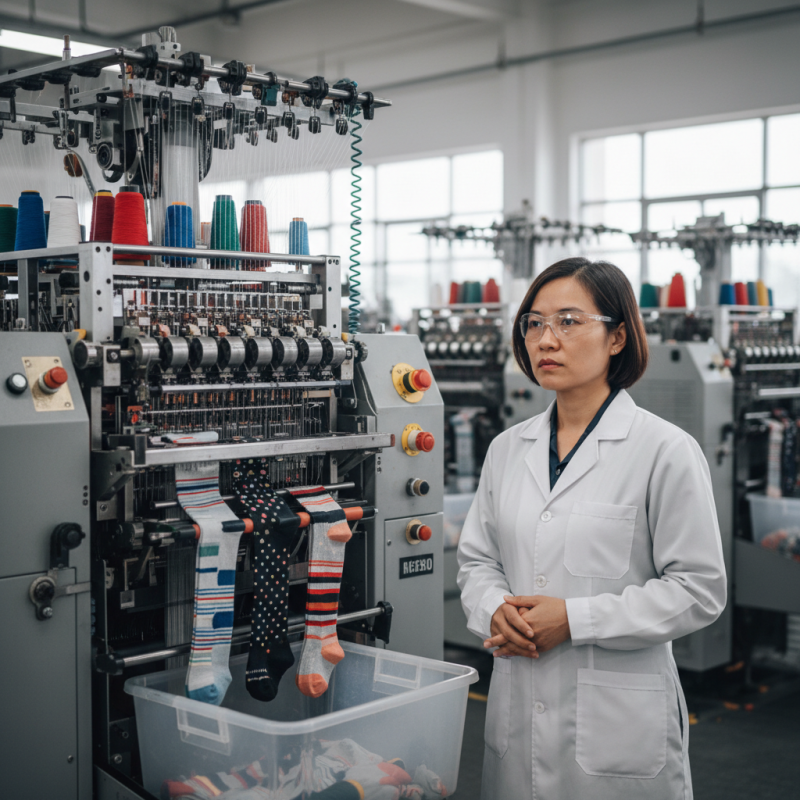
In the textile industry, the "Automatic Sock Making Machine" represents a significant technological advancement. Industry expert Anna Tran states, “These machines have revolutionized sock production.” Her insights reflect a growing trend towards automation.
Automatic Sock Making Machines streamline the production process. They can produce various sock sizes and patterns. This flexibility allows manufacturers to meet diverse consumer needs rapidly. However, despite their efficiency, some issues arise. Machine breakdowns can halt production, causing delays and financial losses.
Additionally, as technology evolves, worker displacement is a concern. The balance of automation and human labor remains a topic for reflection. These machines have improved productivity. Yet, the industry must consider the social impact of such shifts. The journey of the Automatic Sock Making Machine is just beginning, with both challenges and opportunities ahead.
What is an Automatic Sock Making Machine?
An automatic sock making machine is a cutting-edge device designed to produce socks efficiently. This machine utilizes advanced knitting technology to create various styles and sizes of socks. Operators can input designs and specifications through a digital interface, allowing for greater customization. This automated process drastically reduces manual labor.
The machine features high-speed knitting needles that operate simultaneously, increasing production rates. Each sock is crafted with precision, ensuring uniformity. However, the complexity of the technology may pose challenges. Operators need training to avoid costly mistakes. Occasionally, machines can jam, leading to delays. Evaluating efficiency is vital to maximize output.
Despite the advantages, reliance on technology can be a double-edged sword. While it streamlines production, it may reduce employment opportunities in traditional craft-based sock making. This shift raises questions about the sustainability of such machines. Balancing automation and human skills is essential for the future of sock production.
The History and Development of Sock Making Machines
The journey of sock making machines started in the late 16th century. Initially, artisans crafted socks by hand. This method was labor-intensive and time-consuming. The demand for socks grew rapidly, leading to the need for faster production techniques.
In the 19th century, innovations emerged. The invention of the stocking frame revolutionized the industry. This machine allowed for quicker and more uniform production. The transition from hand-crafting to mechanization was not flawless. Many early machines faced mechanical failures. Workers had to adapt to new processes, which caused frustration.
As technology advanced, automatic sock making machines came into play. These machines integrated sophisticated mechanisms. They improved efficiency and consistent quality. However, reliance on machines raised concerns about job loss and skill degradation. The balance between automation and craftsmanship remains a topic of debate. Each advancement in sock production reflects both progress and the challenges of innovation.
What is an Automatic Sock Making Machine and How Does it Work? - The History and Development of Sock Making Machines
| Feature |
Description |
| Type of Machine |
Automatic |
| Production Capacity |
Up to 300 pairs per hour |
| Power Consumption |
1.5 - 3 kW |
| Number of Needles |
72 - 144 |
| Fabric Types |
Cotton, Nylon, Wool, Blends |
| Control System |
Computerized with Touch Screen |
| Key Innovation |
Seamless Sock Knitting Technology |
| Historical Development |
Evolved from manual knitting to digital control systems |
| Market Trend |
Growing demand for customized and high-performance socks |
Key Components of an Automatic Sock Making Machine
Automatic sock making machines are revolutionizing the textile industry. These machines have several key components that work together seamlessly. Understanding these components is crucial for manufacturers looking to enhance efficiency.
One of the main components is the knitting mechanism. It operates with precision to create various sock designs. Data shows that these mechanisms increase production speed by 30% compared to manual methods. Another essential part is the control system. This system allows operators to set patterns and monitor performance. A report from the Textile Machinery Association highlights how advanced control systems reduce errors by up to 25%.
Additionally, the assembly unit plays a critical role. It manages sock finishing processes, such as linking and toe closing. This part often encounters challenges, particularly in adjusting to different sock sizes. Inconsistencies can lead to increased waste, but new technologies are emerging to address these issues. Manufacturers must remain vigilant about these components to maintain quality and efficiency in production.
The Sock Production Process: Step by Step
The sock production process starts with yarn selection. Fibers such as cotton, wool, or synthetic materials are chosen based on desired qualities. The yarn is then spun into threads suitable for knitting. Once the yarn is ready, the sock making machine takes over.
Knitting machines are programmed to create various patterns and sizes. They work quickly and efficiently, producing multiple socks simultaneously. The machine interlocks the yarn to create the sock's body, shaping the heel and toe areas precisely. After knitting, the socks are finished with additional processes like washing and drying.
Tips: Inspecting the quality of the yarn before production is vital. Poor-quality materials can lead to defective socks. Regularly maintaining the machine ensures optimal performance. Remember, machine settings may need adjustment for different yarn types.
Finally, packing is an essential step. Socks must be folded neatly and packaged properly for shipment. It is easy to overlook this stage, but neat packaging enhances presentation and prevents damage. Attention to detail throughout the sock production process leads to higher quality outputs.
Advantages of Using Automatic Sock Making Machines
Automatic sock making machines have transformed the textile industry. These machines streamline the sock production process, improving efficiency. They operate with precision, significantly reducing wasted materials. As a result, socks can be produced at a much faster rate compared to manual methods. This speed is crucial in meeting the growing demand for socks globally.
One major advantage of using these machines is consistency. Each sock produced is uniform in size and quality. This reduces the chances of defects, ensuring customer satisfaction. With automatic machines, manufacturers can quickly adapt to changing fashion trends. They can easily switch between styles and patterns with minimal downtime. However, it's important to consider the upfront investment. The initial costs can be high, but the long-term savings often justify the expense.
Another benefit is the reduction in labor requirements. Automatic machines reduce the number of workers needed for production. This can lead to cost savings and less dependency on manual labor. However, this shift can raise concerns about job loss in the industry. Striking a balance between automation and human employment is essential. While automation offers many advantages, it also necessitates ongoing reflection on its impact on jobs. These complexities are worth considering for manufacturers looking to invest in technology.
FAQS
: The knitting mechanism creates various sock designs with high precision. It increases production speed by 30%.
The control system sets patterns and monitors performance, reducing errors by up to 25%.
The assembly unit manages sock finishing processes but struggles with adjusting to different sock sizes.
Selecting high-quality yarn is crucial. Poor materials can result in defective socks during production.
The process includes yarn selection, spinning threads, knitting, finishing, and packaging the socks.
Regular machine maintenance is key. Adjustments may be needed for different types of yarns.
Proper packaging enhances presentation and prevents damage. Overlooking this can affect customer satisfaction.
Operators must keep attention to detail. Inconsistencies can lead to increased waste and dissatisfaction.
Yes, machine settings may differ based on yarn types. Operators should adjust accordingly to ensure quality.
Conclusion
An Automatic Sock Making Machine is a sophisticated device designed to streamline the production of socks, enhancing efficiency and consistency. These machines have evolved significantly over the years, with advancements in technology contributing to their complex yet efficient designs. Key components of an Automatic Sock Making Machine include the knitting mechanism, control systems, and fabric handling features, which work together to automate various aspects of the sock manufacturing process.
The sock production process is methodical, involving steps such as yarn feeding, knitting, linking, and finishing, all of which are carried out seamlessly by the machine. The advantages of using an Automatic Sock Making Machine are substantial, including increased production speed, reduced labor costs, and improved product quality. By embracing automation, manufacturers can meet growing consumer demands while maintaining high standards in sock production.

 Rainbowe