Choosing the best China Hosiery Knitting Machine requires more than comparing prices or browsing polished product photos. In real production, small details matter. Needle movement, cylinder precision, yarn tension, and software stability can shape every pair. A machine that runs smoothly during a showroom demonstration may behave differently after several continuous shifts. That difference deserves attention.
What Is the Best China Hosiery Knitting Machine? The answer depends on your products, capacity, and technical team. A sports sock factory may prioritize high speed and reinforced heel production. A fashion manufacturer may need flexible patterns, fine gauges, and accurate color control. Buyers should examine output consistency, machine gauge, compatible yarns, power consumption, and maintenance access. Ask for sample production under your actual yarn and design conditions. Numbers alone are not enough.
Reliable suppliers should provide clear specifications, traceable quality records, training, spare-parts support, and responsive after-sales service. Independent testing can strengthen confidence, especially when comparing claims about speed or defect rates. Visiting an operating factory is even better. Listen to the machine. Check the fabric surface. Inspect rejected pieces beside finished products. It is easy to overlook operator skill, installation quality, and local service coverage. I have also seen buyers focus too heavily on initial cost. That choice can become expensive when downtime, unstable knitting, or difficult repairs appear later. Still, no evaluation is perfect. Conditions change, and supplier promises require verification. The best decision combines technical evidence, practical trials, and a realistic view of long-term production needs.
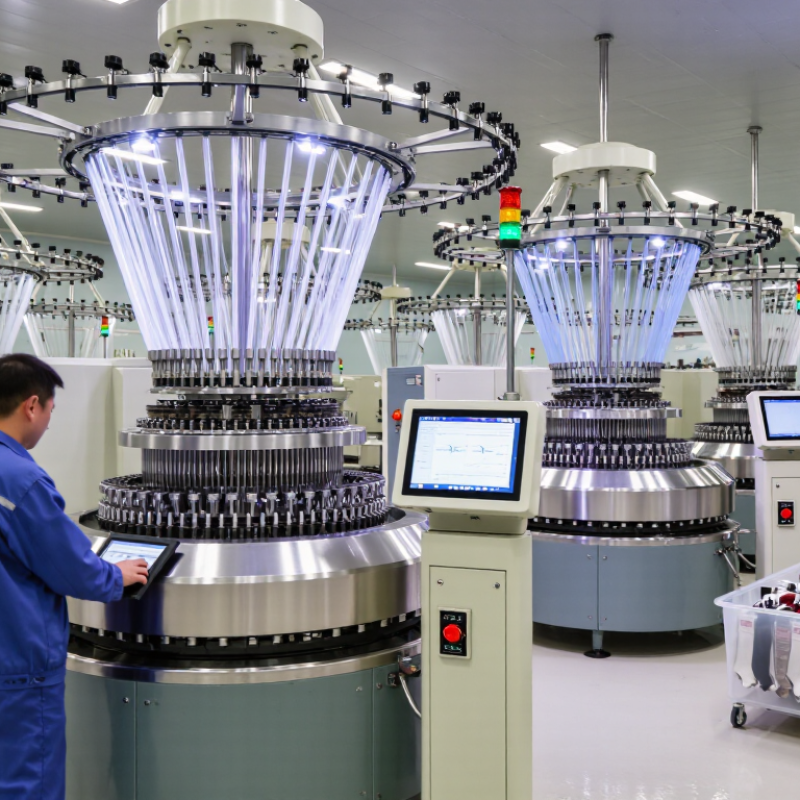
What Is the Best China Hosiery Knitting Machine?
Types of China Hosiery Knitting Machines
The best machine depends on product structure, gauge, output, and finishing requirements. A single-cylinder machine suits everyday socks, sports socks, and basic rib designs. It offers stable production and simpler maintenance. A double-cylinder machine creates stronger patterns, shaped heels, and finer rib effects. It requires more precise settings and skilled operators. Terry machines add looped cushioning for work, athletic, and winter socks. Computerized jacquard machines produce detailed motifs, but programming quality affects waste and consistency. Seamless hosiery machines support smooth garments with fewer sewn joins. However, they often demand higher technical control.
Grand View Research valued the global hosiery market at about USD 87.8 billion in 2023. Its report expects continued growth through 2030. This demand supports investment in flexible equipment, especially machines that switch styles quickly. The International Textile Machinery Federation reported large circular knitting machine shipments in 2023, showing a softer machinery cycle. That matters. A cheaper machine is not automatically the best choice. Electricity use, spare-part access, needle replacement, and operator training can change the real cost. Some specifications look excellent on paper, yet production results may disappoint.
Tips: Test the machine with your actual yarn, gauge, and sock design. Check stitch accuracy after several hours, not only during a short demonstration. Ask for maintenance records and training details. Leave room for mistakes; new operators usually need time to control yarn tension.
Choosing the best China hosiery knitting machine requires more than comparing speed. In practical factory evaluations, gauge, cylinder diameter, and needle quality strongly affect fit and fabric density. A machine with 200 needles may produce finer socks, but it can demand better yarn control and more careful maintenance. Higher output is not always better.
Check the machine’s compatibility with cotton, nylon, elastane, recycled fibers, and blended yarns. Textile Exchange reported that global fiber production reached 124 million tonnes in 2023 and may reach 160 million tonnes by 2030. This growth increases the need for flexible yarn handling. ITMF’s International Textile Machinery Shipment Statistics also tracks continuing investment in automated textile equipment, showing why electronic controls, servo systems, and real-time fault alerts matter. Ask for tested output, power consumption, noise levels, and defect rates, not only catalog figures.
Tips: Request samples made with your actual yarn. Inspect toe closing, elastic tension, and pattern accuracy under normal production speed. Confirm spare-part availability, training, remote support, and repair response times. A detailed warranty matters. So does the technician’s knowledge. One weakness remains easy to miss: software upgrades may cost extra and interrupt production. Leave room for that risk when comparing total ownership costs.
| Comparison Factor | Fine-Gauge Sock Machine | Medium-Gauge Sock Machine | Heavy-Gauge Sock Machine | Multi-Function Hosiery Machine |
|---|---|---|---|---|
| Primary Product Range | Dress socks, thin business socks, lightweight fashion socks and fine seamless hosiery. | Daily crew socks, athletic socks, school socks and general-purpose adult socks. | Work socks, thermal socks, sports socks, thick casual socks and cushioned products. | Products requiring several structures, including plain, terry, mesh, tuck and plated designs. |
| Typical Gauge | Fine gauges, commonly selected for thinner yarns and higher stitch definition. | Medium gauges, suitable for a balanced combination of comfort, durability and productivity. | Coarser gauges, designed for thicker yarns and greater fabric bulk. | Gauge depends on the selected cylinder and needle configuration; verify the actual specification before purchase. |
| Cylinder Diameter | Often selected in smaller adult-sock diameters for close-fitting products. | Commonly available in adult-sock diameters around 3.5 to 4.5 inches. | Usually selected with a larger working diameter or a configuration that accommodates bulky yarns. | Must match the intended sock size range; cylinder diameter directly affects the finished tube circumference. |
| Fabric Structure | Plain knit, fine rib, mesh, plated and lightweight pattern structures. | Plain knit, rib, tuck, mesh, terry and basic jacquard structures, depending on the machine setup. | Thick plain knit, terry, half-terry, rib and reinforced sole or heel structures. | Multiple structures may be available, but every additional function should be confirmed with sample production. |
| Needle and Cylinder Selection | Requires fine needles and accurate cylinder selection to prevent dropped stitches and uneven appearance. | Offers a practical balance between needle density, fabric stability and yarn compatibility. | Requires needles, sinkers and feeders that can handle thicker yarns without excessive mechanical stress. | Needle count, cylinder size and gauge must be specified together; one number alone is not enough for comparison. |
| Recommended Yarn Types | Fine cotton, combed cotton, nylon, polyester, viscose blends and other lightweight yarns. | Cotton, polyester, nylon, spandex-covered yarn and common blended sock yarns. | Wool blends, acrylic, recycled fibers, thick cotton yarns and performance yarns. | Yarn compatibility depends on feeder design, yarn tension control and the available knitting programs. |
| Elastic Yarn Capability | Important for close-fitting cuffs and lightweight stretch products; check covered-spandex compatibility. | Normally suitable for standard elastic cuffs and stretch zones when equipped with proper yarn feeders. | Requires stronger and more stable elastic-yarn feeding for thick cuffs and compression areas. | Verify elastic feeder quantity, tension range, break detection and compatibility with the target yarn. |
| Patterning and Design Functions | Best for fine stripes, small logos, mesh effects and delicate patterns. | Suitable for stripes, color blocks, basic jacquard, mesh and selected three-dimensional effects. | Best for texture, terry placement, reinforced zones and bold patterns rather than very fine details. | Look for electronic pattern control, flexible programming, design storage and easy pattern editing. |
| Toe and Heel Options | Confirm whether the machine supports the required toe type, heel shape and automatic closing method. | Common options include reciprocated heels, standard toes and automatic or linked toe closing. | Heel and toe settings must accommodate thicker fabric and increased yarn volume. | Compare toe and heel programming, transfer accuracy, closing quality and changeover time. |
| Control System | Digital control is valuable for repeatable stitch length, speed adjustment and pattern management. | A programmable controller should provide recipe storage, alarm messages and production monitoring. | Stable speed control and overload protection are especially important when knitting bulky yarns. | Prioritize a clear interface, multilingual menus, backup capability and easy parameter adjustment. |
| Production Considerations | Quality and stitch precision are usually more important than maximum machine speed. | Suitable for balanced production where flexibility and consistent daily output are required. | Production speed may be lower with thick yarns, but the machine should deliver stable fabric density. | Evaluate actual samples rather than relying only on a stated maximum speed. |
| Quality-Control Checks Before Buying | Inspect stitch uniformity, mesh definition, yarn tension and fine-gauge needle performance. | Test size consistency, cuff recovery, heel symmetry, toe quality and continuous operation. | Check terry height, fabric weight, reinforced areas, yarn feeding and needle durability. | Request samples for every intended structure, yarn type, size and color-changing function. |
| Energy and Maintenance Factors | Review motor efficiency, lubrication requirements, dust protection and availability of consumable parts. | Choose a machine with accessible maintenance points, clear alarms and straightforward daily cleaning. | Pay special attention to lubrication, lint removal, feeder wear and mechanical load. | Confirm spare-part availability, technical documentation, remote support and operator training. |
| Best Choice For | Manufacturers focused on fine, lightweight and appearance-sensitive socks. | Manufacturers seeking the most versatile option for mainstream sock production. | Manufacturers specializing in thick, warm, durable or highly cushioned socks. | Manufacturers with varied product lines and frequent changes in design or yarn type. |
| Most Important Buying Advice | Prioritize precision Confirm fine-gauge sample quality, needle availability and stitch stability. |
Prioritize balance Compare flexibility, maintenance cost, output consistency and operator usability. |
Prioritize durability Verify the machine can run the planned thick yarns continuously without excessive wear. |
Prioritize verification Test the complete product range and obtain a detailed specification sheet before ordering. |
Note: Actual gauge, needle count, cylinder size, speed, output and available functions vary by machine configuration. Request production samples and a complete technical specification before making a final purchase decision.
What Is the Best China Hosiery Knitting Machine?
Leading Chinese manufacturers offer several machine models for different hosiery requirements. Single-cylinder machines suit basic socks, sports socks, and steady medium-volume production. Double-cylinder models handle rib structures, thicker textures, and more complex patterns. Computerized sock machines provide electronic pattern control, while seamless models focus on smoother toe and body construction.
A practical comparison should examine needle capacity, cylinder diameter, knitting speed, yarn compatibility, and power consumption. A 168-needle machine may produce fine everyday socks, while heavier yarn often needs a different cylinder and feeding system. Ask manufacturers for sample fabric, not only catalog photographs. The sample should show clean heels, stable cuffs, and consistent stitch density.
Experienced buyers also inspect the control panel, spare-part availability, and technician response time. Chinese manufacturers may provide customization, installation guidance, and remote troubleshooting. However, service quality can vary between factories. A low purchase price may become expensive when sensors, feeders, or control boards fail. That risk deserves attention.
Check machine records, factory testing procedures, and user references before ordering. Request a written specification covering output, warranty terms, training, and delivery details. An impressive demonstration may not reflect long shifts in a real workshop. Leave room for doubt. The best model is not always the fastest one; it is the machine that matches your yarn, operators, product range, and maintenance ability.
This comparison summarizes common technical ranges for hosiery knitting machine categories manufactured in China. The data focuses on cylinder diameter, typical needle count, and indicative production capacity rather than any company or brand. For most standard sock production, computerized single-cylinder machines offer the best balance of flexibility, efficiency, and product variety.
Choosing the best machine depends on your production, not its advertised speed. A factory making fine dress socks needs different settings from one producing thick sports socks. Check the cylinder diameter, needle gauge, compatible yarns, and maximum knitting speed. These details affect texture, sizing, and daily output.
Ask for a sample before placing a large order. Test the machine with your actual yarn, including recycled or elastic materials if required. Measure stitch consistency, fabric weight, waste, and machine noise during a full shift. Do not trust a short demonstration. It may hide heating problems or frequent thread breaks. Test it properly.
Maintenance access matters as much as performance. Inspect the control panel, lubrication points, spare-part availability, and fault records. A skilled technician should explain settings clearly, not only provide a manual. Check training, warranty terms, electrical safety documents, and service response times. These practical details show whether the supplier understands production conditions.
A higher needle count is not automatically better. It can increase precision but may demand finer yarn and stricter maintenance. Lower speed may sometimes produce fewer defects and less waste. That is easy to overlook. Compare the machine’s total operating cost over three years, including labor, energy, repairs, and rejected products. The cheapest purchase can become the most expensive decision.
The best China hosiery knitting machine is not always the fastest machine on its first day. Maintenance access matters more over ten years. Operators should reach the needle cylinder, sinkers, sensors, and lubrication points without extended disassembly. A clean workspace around these parts prevents lint buildup and uneven knitting tension. The U.S. Department of Energy’s Operations & Maintenance Best Practices guide estimates that preventive maintenance can reduce costs by 12–18% compared with reactive maintenance. That benchmark is not hosiery-specific, but it gives buyers a useful financial reference.
Efficiency should be measured beyond production speed. Record kilowatt-hours per kilogram, first-pass yield, downtime minutes, and changeover time. ISO 22400 provides a recognized framework for production performance indicators, including availability, performance, and quality.
The European Commission’s Textile Industry BAT Reference Document also supports process-level monitoring of energy and resource use. A machine with automatic fault alerts can shorten troubleshooting, but sensors still require calibration. Small errors become expensive.
Long-term operating cost includes needles, lubricants, technician visits, training, and spare-part availability. I would request a five-year cost estimate before comparing purchase prices. A cheaper machine may consume more electricity or lose precision after heavy use. In practice, operators sometimes overlook this. I have also seen maintenance schedules treated as suggestions. That is a mistake. Yet no calculation is perfect; workload, yarn type, humidity, and operator skill can change the result significantly.
Gauge, cylinder diameter, and needle quality affect fit, density, and stitch consistency. A 200-needle cylinder may create finer fabric. It also demands tighter yarn control and maintenance. More needles are not always better.
Request samples using your actual cotton, nylon, elastane, or blended yarn. Test recycled fibers when needed. Inspect toe closing, elastic tension, pattern accuracy, fabric weight, and waste. Use normal production speed. Short demonstrations can hide problems.
Treat catalog speed as a reference, not a promise. Measure output, defect rates, noise, and downtime during a full shift. Lower speed may reduce defects and waste. That trade-off is easy to miss.
Fine dress socks and thick sports socks need different settings. Check gauge, cylinder diameter, yarn compatibility, and maximum speed. These choices influence texture, sizing, and daily output. Product requirements come first.
Operators should reach the needle cylinder, sinkers, sensors, and lubrication points easily. Long disassembly wastes production time. Check for lint buildup around working parts. A clean area supports steadier knitting tension.
Compare electricity, needles, lubricants, labor, training, repairs, software upgrades, and rejected products. Record kilowatt-hours per kilogram, downtime minutes, and changeover time. Use a three-year or five-year estimate. The cheapest purchase may cost more later.
Electronic controls, servo systems, and fault alerts can shorten troubleshooting. Sensors still need calibration. Ask about training, spare parts, remote support, warranty terms, and repair response times. A manual alone is not enough.
Software upgrades may cost extra and interrupt production. Humidity, yarn type, workload, and operator skill can change results. Maintenance schedules are sometimes treated as suggestions. That is a mistake. No calculation is perfect.
Choosing the best China Hosiery Knitting Machine depends on your product range, production volume, budget, and quality requirements. Common machine types include single-cylinder, double-cylinder, computerized, and specialized models for socks, stockings, and seamless hosiery. Before buying, compare knitting speed, needle configuration, automation level, pattern flexibility, energy consumption, compatibility with different yarns, and ease of operation. A reliable machine should deliver consistent sizing, smooth fabric quality, accurate patterns, and stable performance during long production cycles.
When evaluating Chinese manufacturers and machine models, focus on technical specifications, customization options, spare-part availability, operator training, and after-sales support rather than appearance or price alone. The best choice should match your daily output and future expansion plans. Maintenance also has a major effect on efficiency and operating costs. Regular cleaning, lubrication, needle inspection, software updates, and timely replacement of worn parts can reduce downtime and extend machine life. With proper selection and care, a Hosiery Knitting Machine can improve productivity, control manufacturing expenses, and support consistent long-term production.

Rainbowe