Choosing the best socks making machine manufacturer in China requires more than comparing prices. It requires evidence, factory experience, and measurable production results. The global hosiery industry continues to benefit from demand for sportswear, compression products, and everyday comfort. Reports from Grand View Research and Mordor Intelligence identify product innovation and automated production as important market drivers. However, market forecasts are not promises. They must be tested against real factory performance.
A reliable supplier should explain how its machines handle cotton, polyester, nylon, and blended yarns. It should also show samples made at different speeds and densities. International Textile Machinery Federation reports, including its International Textile Machinery Shipment Statistics, provide useful signals about investment in textile automation. These reports do not replace an on-site audit. They only create a starting point.
Machine Make Socks is not simply a search phrase. It represents a complete production decision. Buyers should examine knitting accuracy, needle durability, servo control, power consumption, and spare-parts availability. A practical test may include running 100 pairs, checking heel alignment, and measuring defect rates. Ask for maintenance records, operator training plans, and documented quality procedures. ISO 9001 certification can support confidence, but certification alone cannot guarantee every machine’s performance.
The strongest Chinese manufacturers combine engineering knowledge with responsive service. They should provide clear specifications, installation support, and realistic delivery schedules. Some suppliers communicate well before payment, then respond slowly after installation. That possibility deserves attention. Factory visits, video inspections, independent testing, and written acceptance criteria can reduce uncertainty. No manufacturer is perfect. The better choice is the one that explains limitations honestly and improves them consistently.
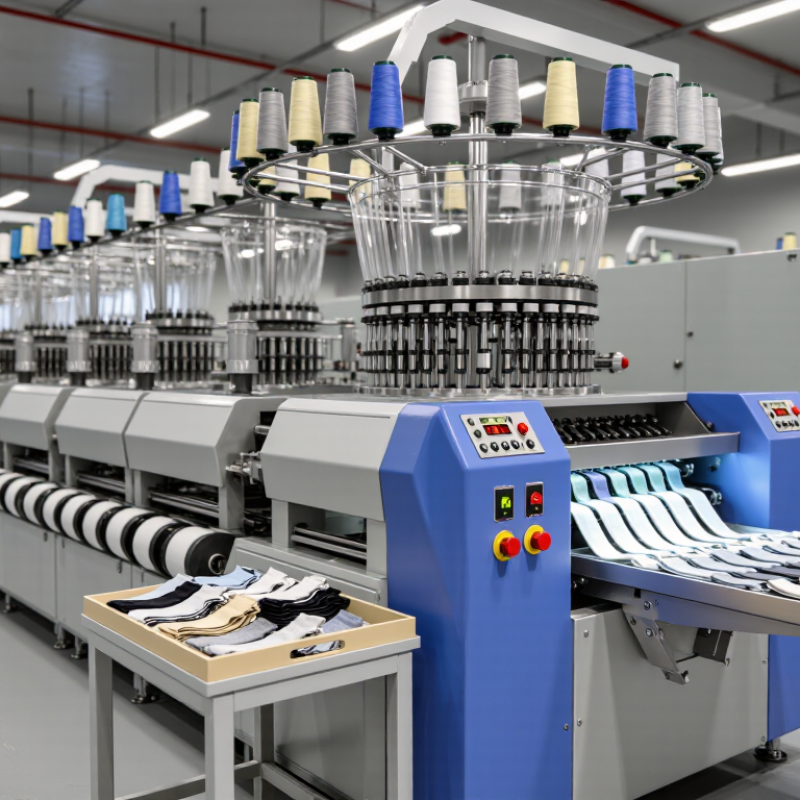
Socks making machines differ by needle count, cylinder diameter, and knitting method. Single-cylinder models commonly produce everyday crew, ankle, and athletic socks. Double-cylinder machines can create ribbed structures and more complex patterns. Specialized machines handle toe closing, terry loops, or compression zones, depending on their configuration. The right choice depends on the sock design, yarn, and expected production volume.
A modern machine may offer electronic pattern control, automatic color changes, and fault alerts. These features help operators manage repeat designs and spot broken yarn before defects spread. Check the machine’s gauge and needle count against the fabric density you need. A fine-gauge setup can produce lightweight dress socks, while a coarser setup suits thicker work or sports socks. Details matter. Even a capable machine needs careful yarn tension and regular maintenance; otherwise, uneven stitches can appear across a batch.
Industrial applications include casualwear, sportswear, medical hosiery, and private-label production. For example, a factory making cushioned running socks may need terry knitting and reinforced heel and toe areas. A small workshop producing patterned fashion socks may value quick design changes more than maximum output. These examples are not fixed rules. Actual results vary with yarn quality, operator skill, and finishing equipment, so buyers should test representative samples before setting production targets.
Choosing the best socks making machine manufacturer in China requires more than comparing prices. Visit the factory, if possible, and observe the production floor. Check whether machines are assembled carefully, with protected wiring and clearly labeled components. Ask to see a working machine producing socks similar to your planned designs. A real demonstration reveals noise, knitting speed, pattern accuracy, and operator workload.
Review the manufacturer’s technical experience and quality controls. Request machine specifications, inspection records, installation procedures, and training details. Reliable suppliers explain limitations instead of promising everything. Confirm the availability of needles, cylinders, software support, and replacement parts. Ask how quickly technicians respond when production stops. Customer references can help, but they should include recent buyers with similar machine requirements. A polished showroom is not enough. I once focused too much on appearance and overlooked slow technical communication.
Tips: Compare at least three manufacturers. Test several fabric types. Ask for a written warranty. Check packaging before shipment. Clarify payment stages and delivery responsibilities. Keep every technical promise in writing. Also, calculate electricity use, labor needs, maintenance costs, and expected output. The cheapest machine may become expensive when small faults interrupt daily production. A factory audit may still miss hidden problems, so use trial orders and independent inspection where practical.
Modern socks manufacturing equipment combines computerized control with precise mechanical movement. A programmable system stores patterns, adjusts stitch density, and controls color changes during production. Servo motors guide yarn feeders with steady tension. This helps create cleaner cuffs, heels, and toe sections.
Yarn tension sensors are equally important. They detect sudden resistance before broken yarn causes long defects. Needle cylinders with fine machining improve loop formation and reduce uneven textures. Some machines use automatic toe closing, which saves labor and creates a smoother finish. It is a small detail. Comfort depends on it.
In practical factory use, operators still inspect fabric by hand. Automation does not remove every risk. Dust, worn needles, and incorrect settings can affect quality quickly. Therefore, reliable equipment should support easy maintenance, clear fault alerts, and accessible replacement parts. Energy-efficient motors can lower operating costs during long shifts. However, claimed savings should be checked through real production records, not brochures alone. A capable Chinese manufacturer should provide testing data, technical training, and responsive service for different yarn types and sock structures. Trial production remains essential before large-scale orders. Mistakes become expensive later.
A reliable sock-making machine factory shows its standards on the production floor, not only in brochures. Each machine should have traceable serial records and calibrated gauges. Incoming parts need documented inspection. Operators should check needle beds, cylinder alignment, yarn tension, and electrical safety before assembly. ISO 9001 procedures can control these steps. However, certification alone does not guarantee consistent machines. The ISO Survey 2022 recorded more than 1.2 million ISO 9001 certificates worldwide, making process evidence essential.
Factory capability must match the buyer’s product range. A serious facility can provide samples using different gauges, cotton blends, elastic yarns, and reinforced heels. It should disclose knitting speed, power demand, changeover time, and tolerance limits. On-site testing should examine dropped stitches, uneven loops, and heel symmetry. Textile Exchange’s 2023 Materials Market Report measured global fiber production at 116 million tonnes in 2022. It projects 147 million tonnes by 2030. Higher demand requires stable output, not exaggerated speed claims.
Quality control should continue after shipment. Ask for inspection records, spare-part lists, training plans, and troubleshooting procedures. ITMF’s International Textile Machinery Shipment Statistics shows changing machinery demand across textile sectors. Capacity forecasts can become outdated quickly. No factory is flawless. A supplier promising zero defects deserves careful questioning. Transparent failure reports are more credible. The best manufacturer should welcome an audit and explain what still needs improvement.
The chart presents ISO 2859-1 General Inspection Level II reference sample sizes for quality-control inspections. These values are industry-standard sampling references and do not represent any specific company or brand.
Larger production lots require larger inspection samples under the standard. Factories can use this framework together with incoming-material checks, knitting-process inspections, dimensional testing, appearance checks, and final shipment audits.
Best Socks Making Machine Manufacturer in China
Purchasing, Installation, Training, and After-Sales Support
Choosing a socks making machine manufacturer in China starts before the purchase order. A reliable supplier studies yarn type, sock size, daily output, and local power conditions. Ask for machine test videos, component lists, and written production capacity. Request knitted samples using your yarn, not only showroom fabric. A useful quotation separates machine cost, shipping, installation, training, and spare parts. It should also state delivery dates and warranty limits. Cheap prices can hide expensive downtime.
Installation needs more than placing equipment on a factory floor. The supplier should provide foundation guidance, wiring diagrams, air requirements, and a commissioning schedule. Technicians can check needle selection, lubrication, controller settings, and yarn tension during startup. Keep a level meter nearby. Small floor errors may cause vibration and uneven stitches. Remote support helps, but an on-site technician often finds problems faster. No setup is perfect. Cable routing or ventilation may need adjustment after the first production run.
Practical training should include operators and maintenance staff. Operators need repeated practice with pattern loading, thread changes, alarm handling, and quality checks. Maintenance staff should learn needle replacement, sensor cleaning, and lubrication intervals. Use a signed training checklist. It prevents missed details. After-sales support should offer clear response times, digital manuals, spare-part identification, and troubleshooting videos. Ask how urgent faults are escalated across time zones. A dependable manufacturer records recurring issues and improves instructions instead of blaming operators. That attitude matters when orders are waiting and a machine stops at midnight.
| Purchasing Stage | Key Information or Service | What to Confirm | Practical Planning Notes |
|---|---|---|---|
| Production requirements | Intended sock styles, yarn types, size range, output goals, and required finishing processes. | Ask the supplier to match the proposed machine configuration to sample products and yarn specifications. | Machine capabilities depend on the model, cylinder configuration, gauge, attachments, yarn, and production settings. |
| Model and specification review | Written technical specification covering machine type, needle count or gauge, compatible materials, controls, and included accessories. | Confirm the exact configuration, operating voltage and frequency, installation requirements, and list of excluded items. | Specifications and compatible products vary by machine model; obtain the current model-specific documentation before ordering. |
| Quotation and order terms | Itemized quotation, payment schedule, production lead time, packing details, and delivery terms. | Check what is included in the machine price, how acceptance is defined, and how changes to the order are handled. | Lead times, shipping costs, import duties, and delivery responsibilities depend on the order and destination. |
| Pre-shipment inspection | Inspection against the agreed specification, review of accessories, and, where agreed, a test run using specified materials. | Agree in advance on inspection steps, sample criteria, documentation, and how any identified issues will be addressed. | A test result is meaningful only when the product, yarn, settings, and acceptance criteria are clearly recorded. |
| Installation preparation | Site, floor-space, power, environmental, and any compressed-air requirements specified for the selected machine. | Request the installation manual and confirm the required power supply and utilities with a qualified local technician. | Requirements are model-specific. Do not assume that a machine uses compressed air or a particular electrical supply. |
| Delivery and setup | Unpacking, positioning, leveling where required, connection checks, and initial machine setup. | Clarify whether setup is performed by supplier personnel, a local service provider, or the buyer’s technicians. | On-site support, travel costs, scheduling, and responsibility for lifting or handling equipment should be agreed before shipment. |
| Operator training | Training may cover machine operation, basic settings, yarn handling, routine cleaning, and safe working practices. | Confirm training format, language, duration, number of participants, and whether training is remote or on-site. | Training scope varies. Arrange qualified instruction and follow the machine’s safety manual and local workplace rules. |
| Maintenance and spare parts | Maintenance schedule, recommended consumables, illustrated parts list, and ordering process for replacement components. | Ask which parts are wear items, how to identify them, and what information is needed to place a parts order. | Availability and delivery time depend on the component, stock status, and destination; confirm current terms with the supplier. |
| After-sales technical support | A documented contact route for troubleshooting, operating questions, and service requests. | Confirm support hours, available languages, response process, remote-support options, and any service charges. | Response times and service coverage should be agreed in writing; they are not the same for every supplier or destination. |
| Warranty and documentation | Warranty terms, operating and maintenance manuals, electrical diagrams where applicable, and machine identification details. | Review warranty start date, coverage, exclusions, claim procedure, and responsibility for parts, labor, and transport. | Warranty coverage is contract-specific. Keep purchase, inspection, installation, and maintenance records. |
| Supplier evaluation | Assessment of technical fit, documented service arrangements, reference information, and clarity of commercial terms. | Request verifiable documentation and compare quotations on the same machine configuration and service scope. | A detailed written agreement helps avoid misunderstandings about machine performance, delivery, installation, and support. |
Note: Machine specifications, delivery schedules, installation arrangements, training, warranty coverage, and after-sales services vary by model, supplier, order, and destination. Confirm all details in writing before purchase.
Visit the factory when possible. Observe assembly quality, wiring protection, labels, noise, and operator workload. Test a working machine with similar sock designs. A polished showroom is not enough.
Ask for machine specifications, inspection records, installation procedures, training plans, and warranty terms. Request component lists and written production capacity. Keep every technical promise in writing.
Compare at least three suppliers. Review machine prices, electricity use, labor needs, maintenance costs, output, and spare-part availability. The cheapest machine may create costly downtime.
Test several fabric types and your own yarn. Check knitting speed, pattern accuracy, vibration, noise, and thread handling. Watch the operator change threads and respond to alarms. Test it live.
The quotation should separate machine cost, shipping, installation, training, and spare parts. It should state delivery dates, payment stages, responsibilities, and warranty limits. Missing details can cause disputes later.
Installation may require foundation guidance, wiring diagrams, air requirements, and a commissioning schedule. Technicians should check needles, lubrication, controller settings, and yarn tension. Keep a level meter nearby. Small floor errors can cause vibration and uneven stitches.
Operators need practice with pattern loading, thread changes, alarm handling, and quality checks. Maintenance staff should learn needle replacement, sensor cleaning, and lubrication intervals. Use a signed checklist. Some details may still be forgotten.
Ask about response times, digital manuals, spare-part identification, troubleshooting videos, and time-zone escalation. Confirm how technicians handle urgent production stops. Remote support helps, but on-site assistance may solve problems faster. Keep records.
Choosing the right socks making machine manufacturer in China requires more than comparing prices. Buyers should first consider the types of machines available, their production capacity, fabric compatibility, automation features, and suitability for different industrial applications. Modern equipment may use precise electronic controls, efficient knitting systems, and monitoring technology to support consistent output and reduce material waste. Evaluating a manufacturer also means reviewing its engineering experience, factory capabilities, quality-control procedures, and adherence to relevant manufacturing standards.
A dependable supplier should provide clear guidance throughout purchasing and installation, along with practical operator training and responsive after-sales support. Before making a decision, confirm machine specifications, maintenance requirements, spare-parts availability, and the scope of service. Whether you are expanding a production line or starting a new operation, understanding how a Machine Make Socks system fits your workflow can help you choose equipment that meets your quality and productivity goals.

Rainbowe