 Rainbowe
What Is a Stocking Knitting Machine and How Does It Work?
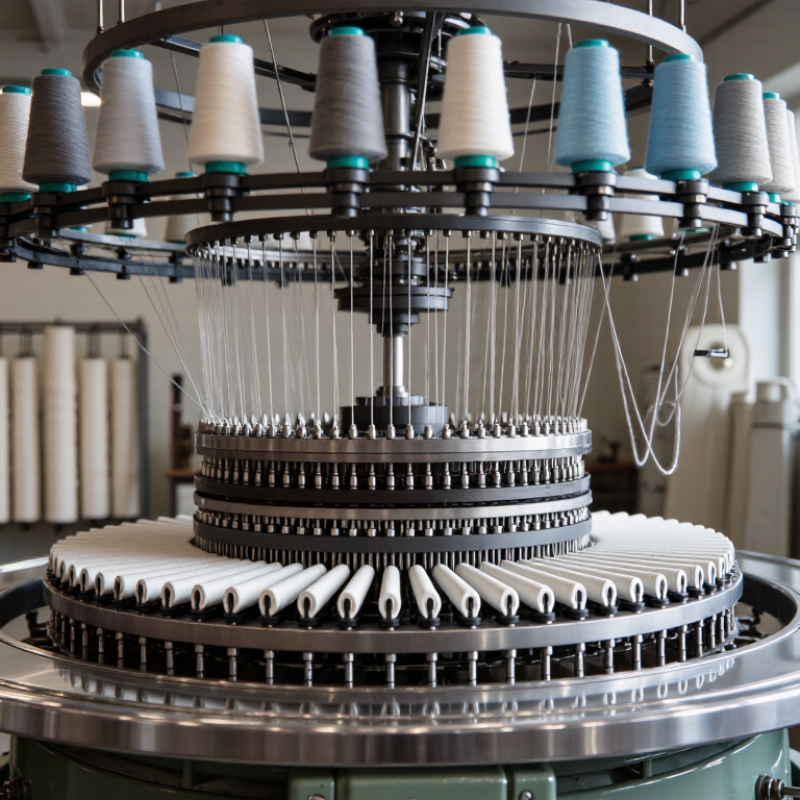
A stocking knitting machine builds fabric around a rotating cylinder. The cylinder holds vertical needles in precisely spaced grooves. Each needle rises, receives yarn, and forms a new loop. Sinkers sit beside the needles. They hold the fabric edge while needles pull loops downward. Without sinkers, the fabric can lift, distort, or drop stitches.
The 84–240-needle range describes cylinder capacity, not simply machine size. Lower counts create thicker, more open stockings. Higher counts produce finer fabric with smoother surfaces. A 200-needle cylinder places less space between neighboring loops than an 84-needle cylinder. That difference affects yarn choice, stretch, warmth, and visual detail.
During setup, I check needle butts, sinker timing, and yarn tension by turning the cylinder slowly. Small timing errors become visible as vertical lines.
Industry data gives useful context. The ITMF International Textile Machinery Shipment Statistics 2023 reported a double-digit decline in global large circular knitting machine shipments, showing that equipment investment remains sensitive to market conditions. Textile Exchange’s Materials Market Report 2024 estimated polyester at about 57% of global fiber production. That figure matters because synthetic yarns often require careful tension control and heat management.
The needle count alone never guarantees quality. I have seen a fine-gauge setup fail because the sinkers were worn. More inspection is usually needed.
